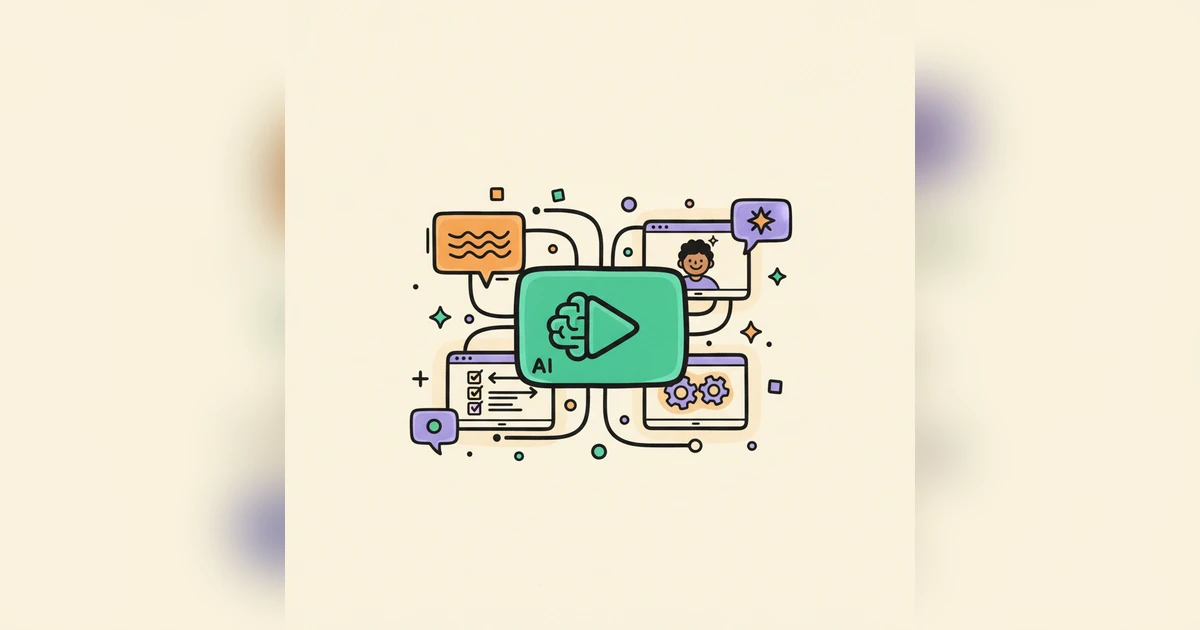
A new user signs up, keen to fix a real problem, and lands on an onboarding video that could have been made for anyone. Nothing in it speaks to their job, their team, or the reason they showed up. That gap is where early momentum quietly dies, and where activation and retention start slipping away one signup at a time.
The Generic Onboarding Trap: Why One-Size-Fits-All Fails
The first few minutes after signup decide a lot. People land on your product carrying different backgrounds, different roles, different skill levels, and a specific problem they expect you to solve today. A single static welcome video, however well produced, can't hold a conversation with all of them at once. It has to pick an average user who doesn't actually exist and talk to that person instead.
So the marketer sits through developer features, the developer sits through marketing examples, and both start wondering whether this tool is really for them. That generic approach leaves newcomers feeling like a number. They can't map your best features onto their own workflow, so they drift off before the moment things click. What you're left with is higher churn and money spent on acquisition that never turns into an active account.
The AI Difference: From Static to Strategic Onboarding
Picture onboarding that reads the room. It adapts to a user's actual situation and points them straight at the features that will matter for their work, instead of walking everyone down the same corridor. That's what AI-driven personalization brings to onboarding video, and it's available now rather than some distant roadmap item.
Rather than sorting people into a few broad buckets, AI works from individual signals — likely goals, role, industry — and assembles video that fits that specific path. The generic product tour gives way to a short, direct route to the first useful outcome. The opening steps feel deliberate instead of one-size-fits-all, and the user gets to a result before their patience runs out.
How AI Pinpoints Personalization Opportunities
Personalization runs on data you already collect. Your product gathers plenty of it, and AI is good at turning that raw material into a clear read on each person. A few of the signals it can work with:
- Signup details: Role (Marketing Manager, Developer, CEO), company size, industry, or the goals a user names during sign-up all give you an immediate starting point before they've clicked anything.
- Referral source: Someone who arrived from an ad about a specific feature, or a blog post about one pain point, is telling you what they came for. Their entry point signals their intent.
- Early product interactions: The first features they click and the pages they linger on reveal their real priorities faster than any survey, and show what they're hoping to solve.
- CRM data: For users who came through sales, your CRM fills in context about their business needs and the tools they already run.
By reading these streams together, AI can group users into tight segments and predict what content will land. Platforms like Woxgen are built to take in this information and use it to pick and generate the right video, so each user sees what's relevant to them, when they need it.
Crafting Hyper-Relevant Video Journeys with Woxgen
This is where it pays off. With Woxgen's AI, understanding a user's needs turns into video built around them — think of a production line that makes custom content on demand instead of one clip stretched across the whole audience.
Some concrete ways relevant video changes onboarding:
Role-based journeys:
- Scenario: A
Marketing Managerjoins your project management platform. - Woxgen's AI: Opens with features that matter to marketing work — campaign tracking, content calendar integration, team collaboration — using examples and terminology that fit the job.
- Contrast: A
Software Developersigning up sees sprint planning, bug tracking, and integration with developer tools like Git instead.
- Scenario: A
Industry-specific solutions:
- Scenario: A
healthcare startupadopts your CRM. - Woxgen's AI: Shows how the CRM handles patient data securely (HIPAA compliance), manages appointment scheduling, and tightens internal communication in a medical practice, with healthcare-specific language and visuals.
- Scenario: A
Feature-focused deep dives:
- Scenario: A user arrives after clicking an ad for your
advanced analytics dashboard. - Woxgen's AI: Skips basic setup and goes straight into getting value from the analytics dashboard, with data examples suited to their likely role or industry.
- Scenario: A user arrives after clicking an ad for your
Problem-solution alignment:
- Scenario: During sign-up, a user says they're struggling with
team communication. - Woxgen's AI: Builds a video showing how your communication features — in-app chat, comment threads, notification settings — address the exact breakdowns they described.
- Scenario: During sign-up, a user says they're struggling with
Woxgen's engine does more than splice pre-recorded clips together. It assembles scenes, voiceovers, screen shares, and custom text overlays around the segment and journey it identified, giving each user a tailored experience without anyone hand-producing hundreds of separate videos.
Beyond Activation: The Long-Term Impact on Retention and LTV
Personalized video onboarding pays off well past the first session. When people feel understood and find value quickly, they stick around, get more out of the product, and often bring others in.
- Fewer support tickets: Users who understand how the product fits their needs hit fewer snags, which cuts support volume.
- Greater feature adoption: Surfacing the right features early and throughout the journey pulls people deeper into what the product can do.
- Higher user satisfaction: A smooth, personal start sets the tone for the whole relationship and earns loyalty and word-of-mouth referrals.
- Higher lifetime value: Engaged users renew, upgrade, and recommend you, which lifts their value to the business over time.
Used this way, AI doesn't just polish onboarding — it reshapes how you think about the whole user experience and gives sustainable growth something solid to build on.
The Future of First Impressions
Generic onboarding doesn't hold up in a crowded SaaS market. Personalized video is closer to table stakes than an edge. It turns a first impression into the start of a real relationship, and passive signups into activated, retained users who stay. Tools like Woxgen make it practical to give every welcome a personal touch and get more out of the users you already worked hard to win.
Related reading: