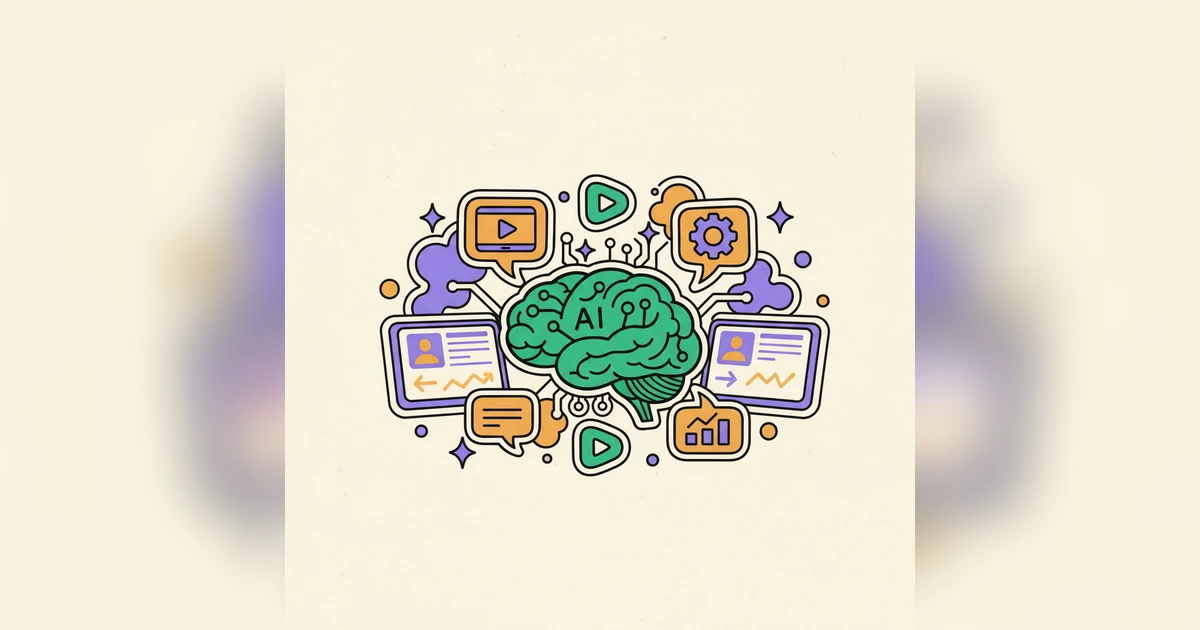
Your product demo is more than just a sales pitch; it's often the very first, and most crucial, encounter a potential customer has with what you offer. Unfortunately, too many still lean on static, one-size-fits-all presentations. These don't just bore; they often fail to convert, leaving prospects feeling utterly uninspired and, well, like just another name on a list.
In today's world, where personalization is king, why are so many of us still showing the exact same demo to everyone? Historically, the answer has been simple: the sheer complexity of tailoring every single interaction at scale. But what if artificial intelligence could flip that script entirely, transforming your demos from predictable monologues into engaging, interactive conversations?
The Fading Art of the Generic Demo
For decades, the product demo followed a familiar script: a salesperson presented features, highlighted benefits, and tried to connect the dots for a room full of diverse individuals. The fundamental flaw in this approach? No two prospects are ever truly alike. What sparks a CTO's interest might leave a marketing manager cold, and a small business owner's most pressing challenges are miles away from an enterprise executive's.
This 'one-to-many' strategy almost guarantees disengagement. Prospects quickly tune out when the content isn't immediately relevant to them. They miss crucial information, or worse, they feel completely unheard. The consequence? Often a drawn-out sales cycle, lost opportunities, and a disappointing first impression that barely scratches the surface of your product's real power.
Personalization at Scale: The AI Advantage
Picture this: every single prospect receives a demo perfectly crafted for their industry, their specific role, their unique challenges, and even their past interactions on your website. This isn't some futuristic fantasy; it's the tangible promise of AI-driven demo automation platforms, like Woxgen.
How? AI algorithms can swiftly analyze immense amounts of data—everything from CRM records and website interactions to survey responses—to build a comprehensive profile of each individual prospect. This profile then acts as the blueprint for a truly hyper-personalized demo, dynamically adjusting content, highlighting relevant features, showcasing ideal use cases, and even shaping the entire narrative flow in real-time. We're talking about moving far beyond simply inserting a name; this is about genuinely understanding and addressing specific needs.
How AI Transforms the Demo Experience
AI doesn't merely personalize; it fundamentally redefines the experience of the demo itself. No longer a passive viewing session, AI empowers an interactive journey where your prospect takes the wheel. For instance, Woxgen leverages AI to:
- Dynamically Generate Scenarios: Based on a prospect's role (e.g., 'Head of Sales'), the AI can instantly present a demo scenario focused on sales forecasting and pipeline management, rather than, say, marketing analytics.
- Highlight Relevant Features: If the AI detects a prospect has been browsing your integration page, the demo can automatically emphasize your product's API capabilities and existing integrations with their current tech stack.
- Adaptive Narration and Visuals: AI can adjust the voiceover tone, on-screen text, and even visual cues to match the prospect's industry terminology or preferred learning style, making the content feel incredibly relevant and immediate.
- Interactive Decision Trees: Prospects can choose their own adventure, clicking on areas of interest or specific challenges they want to explore. The AI then instantly reconfigures the demo path, ensuring every click leads to relevant, valuable information.
This profound level of responsiveness creates an incredibly engaging and memorable experience, proactively addressing a prospect's needs long before they even think to ask.
Beyond the Click: Interactive Demos for Deeper Engagement
Interactive demos, supercharged by AI, are far more than just sleek interfaces. They're meticulously designed to cultivate deeper engagement and dramatically speed up understanding. Consider the stark difference between merely reading a product manual and actually using a product within a guided tutorial.
With these dynamic, interactive elements, prospects gain the power to:
- Explore at Their Own Pace: They can pause, rewind, and re-watch sections, or skip ahead if they already understand a concept. This self-paced learning respects their time and knowledge level.
- Simulate Real-World Usage: Instead of just telling them how a feature works, interactive demos allow prospects to experience it. They can click buttons, input sample data, and see the immediate results, building confidence and familiarity with your product before ever signing up.
- Provide Instant Feedback: AI can track engagement metrics within the demo itself – which features were explored, how long was spent on certain sections, what questions were asked. This data provides invaluable insights to your sales team, informing follow-up conversations with precise context.
This kind of active participation transforms the demo from a passive presentation into a personalized product trial, effectively melting away friction in the buying journey.
Measuring Impact: From Views to Conversions
The true genius of AI-driven demo platforms extends beyond simply crafting personalized experiences; it lies in the incredibly granular data they deliver. Traditional demos offer little insight beyond who showed up. AI-powered platforms, on the other hand, hand you a veritable treasure trove of analytics:
- Engagement Rates: See exactly which parts of the demo captured attention and which fell flat.
- Feature Popularity: Understand which features resonate most with different segments of your audience.
- Completion Rates: Track how many prospects finish the demo and where they might be dropping off.
- Conversion Attribution: Directly link demo engagement to subsequent trial sign-ups, qualified leads, and even closed deals.
This powerful data empowers your sales and marketing teams to constantly optimize demo content, sharpen their targeting, and ultimately, drive significantly higher conversion rates. You'll move from simply guessing what prospects want to knowing it, backed by undeniable certainty.
The Future is Now: Implementing AI-Powered Demos
The move towards automated, interactive, and deeply personalized demos isn't some far-off vision; it's a critical present-day necessity for any company aiming to truly shine in a competitive market. Platforms like Woxgen make this capability accessible, empowering even non-technical teams to build sophisticated, AI-enhanced demo experiences with ease.
By embracing AI, you're doing more than just automating a task; you're fundamentally elevating the entire pre-sales experience. You'll demonstrate a profound understanding of your customers, build genuine trust, and deliver a truly modern, captivating introduction to your product. It's time to stop showing generic and start engaging personally.
The Path Forward
Generic product demos simply don't do justice to your product or your prospects. AI-driven platforms offer a truly transformative solution, making hyper-personalized and interactive experiences possible at scale. These experiences captivate audiences, accelerate the sales cycle, and ensure every first impression truly counts. It's how you turn passive viewers into active, engaged future customers.
Frequently asked questions
What is an AI-powered product demo?
An AI-powered product demo uses artificial intelligence to dynamically tailor and present product information to individual prospects. Unlike static videos, these demos adapt content, features, and narratives based on prospect data, ensuring relevance and maximizing engagement.
How does AI personalize product demos for each prospect?
AI personalizes demos by analyzing data points like a prospect's industry, role, company size, website behavior, and CRM history. It then dynamically adjusts the demo's content, highlights specific features, and constructs use cases that directly address that individual's unique needs and challenges.
What are the key benefits of using interactive product demos?
Interactive product demos significantly boost engagement by allowing prospects to explore features at their own pace, simulate real-world usage, and choose their learning path. This active participation leads to deeper understanding, better retention, and a more compelling product experience than passive viewing.
Can AI demo automation platforms integrate with existing CRM systems?
Yes, leading AI demo automation platforms like Woxgen are designed to integrate seamlessly with popular CRM systems (e.g., Salesforce, HubSpot). This integration allows for robust data exchange, enabling personalized demo creation based on CRM insights and feeding engagement analytics back into the CRM for sales teams.
How long does it typically take to create an AI-driven personalized demo?
The initial setup for an AI-driven demo can take longer than a traditional static video, as it involves mapping out dynamic pathways and content variations. However, once established, creating new personalized versions for different segments or individual prospects becomes incredibly fast, often taking minutes or seconds through automation.
Is AI demo automation suitable for all types of products or industries?
AI demo automation is highly effective across a wide range of products and industries, particularly for SaaS, B2B software, and complex services. Its ability to simplify intricate features and personalize value propositions makes it valuable for any product requiring detailed explanation and tailored solutions.
What kind of ROI can I expect from implementing AI-powered product demos?
Businesses implementing AI-powered product demos often see significant ROI through increased lead qualification rates, shorter sales cycles, higher conversion rates, and improved customer satisfaction. The detailed analytics provided also empower continuous optimization, further enhancing these gains over time.