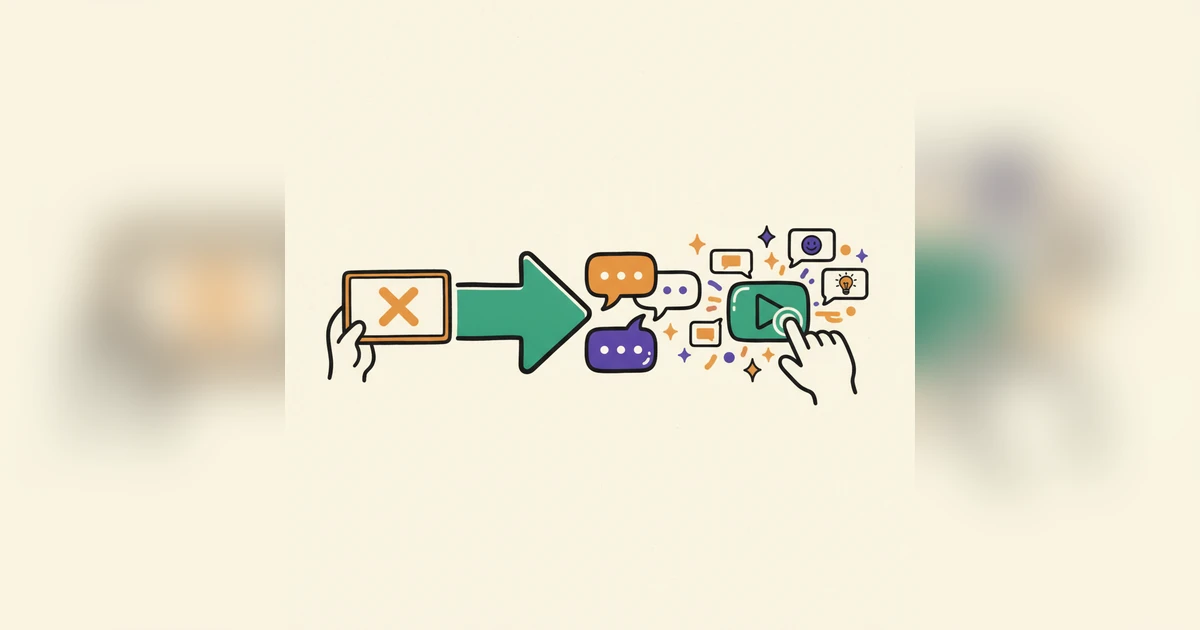
Are prospects actually engaging with your product demos, or scrolling right past them? There's more content than anyone can watch, and a generic screen recording that doesn't speak to a specific need gets ignored. Passive viewing doesn't carry much weight when buyers expect things tailored to them.
Why Static Demos Fall Flat
The standard demo video used to feel cutting-edge. Now it's a commodity. It runs one way, broadcasting features without adjusting to who's watching or what they're trying to fix, and that creates a quiet gap in the buyer's journey.
Take a common case: someone in marketing operations has completely different needs from someone in sales enablement, yet both get the same ten-minute feature tour. That one-size-fits-all approach produces low engagement, high drop-off, and a slow sales cycle. Your team then tries to qualify leads who still don't see how the product fits their world. The buyer feels unheard, and the real value stays hidden behind a pile of irrelevant detail.
What Interactive AI Demos Change
Now picture a demo that adapts. The prospect clicks through options that apply only to them, answers a couple of questions, and gets insights shaped around their role or industry. That's not hypothetical; it's what interactive AI demos do, and it changes how a product gets shown.
An interactive demo turns passive watching into active exploration. Instead of watching, prospects do. They pick their own path, dig into the features tied to their problems, and engage in a way a fixed video can't match. That participation builds a sense of ownership and understanding, which means deeper engagement and better-qualified leads downstream.
How AI Reshapes the Experience
At the center of a good interactive demo is the AI itself. This isn't just clickable hotspots; it's dynamic content, personalized paths, and real-time response. The AI reads what the user chooses and steers them down the route that'll matter most.
Here's how a tool like Woxgen might put that to work:
- Personalized branching. From a first answer, maybe "Which team are you on?" or "What's your biggest challenge?", it serves the relevant walkthroughs. A marketing manager lands on campaign analytics; a sales manager gets routed to lead scoring.
- Contextual highlighting. As someone navigates, it surfaces the features and benefits tied to what they said they cared about, so they don't miss the parts that matter to them.
- Instant answers. An embedded assistant can field a quick question about a feature or pull up a relevant case study on demand, keeping momentum without a rep on the line.
- Scenario building. For complex products, it can spin up mini-scenarios from the user's input, letting them "try" the product in a setting that mirrors their own. That hands-on feel is powerful for making the value concrete.
The upshot: every prospect gets a demo that feels built for them, aimed squarely at their pain points.
Beyond the Click: The Business Impact
Moving from static to interactive isn't just a nicer experience; it shows up across the funnel:
- Shorter sales cycles. Prospects arrive at the first call already educated and qualified. They've named their own needs and seen the product's relevance, which compresses the path from interest to real conversation.
- Higher conversion. When someone genuinely understands how the product solves their problem, they convert more readily. That personalization builds trust and lowers perceived risk.
- Richer insight. Every click and path is data. You learn which features land, what pain points recur, and what draws the most curiosity, and that feeds smarter selling and better product decisions.
- Freed-up reps. Sales can skip the basic walkthrough and spend time on high-value conversations, backed by what the demo already told them.
One B2B SaaS company reported a 30% increase in demo-to-meeting conversion after moving to interactive AI demos. Their reps noted that people showed up to meetings more informed and engaged, which made for better discussions and faster progress. That's the payoff of leaving the old format behind.
Building Your First One: What Works
Ready to make the switch? A few practices that hold up:
- Know your personas and their pain. Before opening any tool, get clear on who you're building for and what they need solved. Each persona may want its own path.
- Map the key journeys. Design a flow that makes sense. What would a user naturally do first? Where will they want more detail? Where can you offer a real choice?
- Make interactivity mean something. Don't add clicks for their own sake. Every interactive element should personalize, answer a question, or prove a specific point.
- Use AI to guide, not just automate. Let it steer, suggest, and adapt. That's more than branching; it's intelligent content delivery.
- Keep it tight. Interactive doesn't mean endless. Don't drown people in options or long detours. Respect their time.
- Wire it to your CRM and analytics. Track every interaction. Who clicked what? Which paths converted? Use it to keep improving.
- Test and refine. Launch, gather feedback, read the numbers, adjust. These demos are living assets that should evolve with your product and your buyers.
Passive product viewing is over. Buyers want relevance, personalization, and some control over how they learn. Interactive AI demos aren't just better sales collateral; they change how you engage, speed up the cycle, and build more informed relationships. Stop just showing, and start engaging.
Frequently asked questions
What are interactive AI demos and how do they differ from static videos?
Interactive AI demos are dynamic product showcases that allow prospects to actively engage with the product through clickable elements, personalized pathways, and AI-guided content. Unlike static videos, they adapt to the viewer's choices and needs, providing a tailored experience rather than a generic walkthrough.
How do interactive demos improve conversion rates for sales?
Interactive demos boost conversion rates by personalizing the buyer journey, ensuring prospects see features most relevant to their needs. This deeper engagement leads to better understanding, higher qualification rates, and prospects arriving at sales calls already educated and more likely to convert.
Is it difficult to create interactive product demos with AI tools like Woxgen?
Modern AI demo creation tools like Woxgen are designed for ease of use, often featuring intuitive drag-and-drop interfaces and pre-built templates. While some planning is required to map out user journeys, the technical execution is generally straightforward, allowing marketing and sales teams to build sophisticated demos without coding.
Can I track prospect engagement and gather insights from interactive demos?
Yes, a major advantage of interactive AI demos is their robust analytics capabilities. You can track every click, path taken, and feature explored, providing valuable insights into what resonates with your audience. This data helps optimize your demos and informs your overall sales and marketing strategies.
What kind of content can be integrated into an interactive AI demo?
Interactive AI demos can integrate various content types including screen recordings, custom graphics, text explanations, pop-up information, embedded videos, forms for lead capture, and even AI-powered chatbots for real-time Q&A. The goal is to provide a comprehensive and engaging experience.
How long does it typically take to create a high-quality interactive demo?
The time to create an interactive demo varies based on complexity and the tool used. A basic demo with a few branching paths might take a few hours, while a highly sophisticated, multi-persona demo with extensive AI integration could take several days to plan and build. Ongoing optimization is also key.