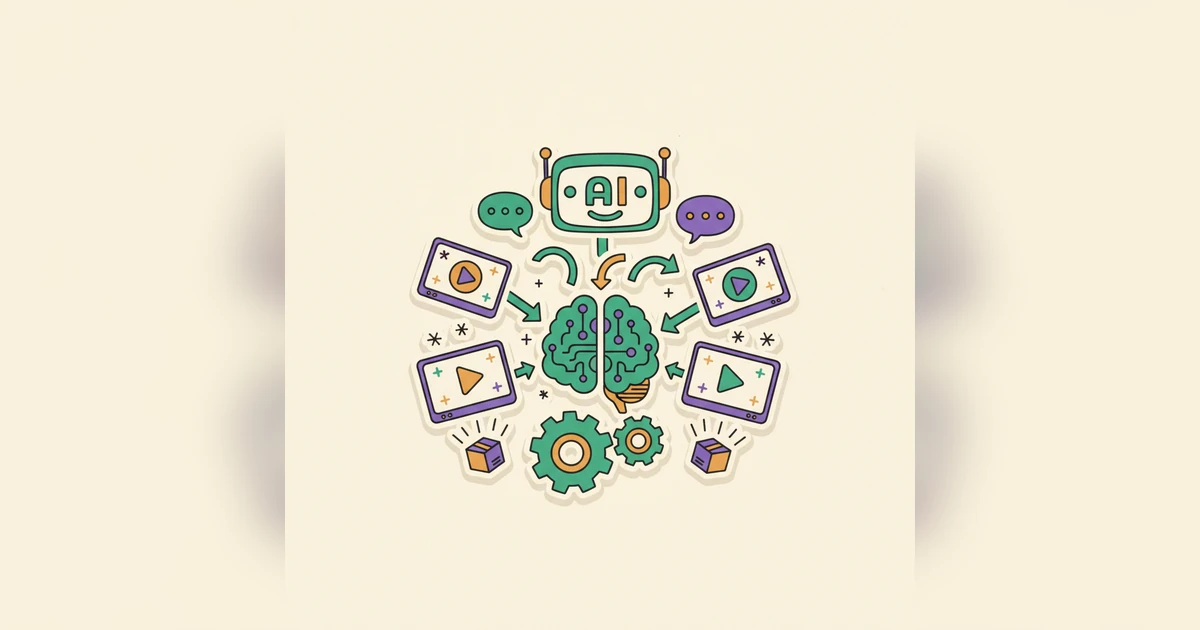
Here's a familiar scene: you're walking a prospect through a feature they'll never use, and meanwhile the one thing that would actually win them over never comes up. Everything else in software has bent toward personalization, so why are so many product demos still built one-size-fits-all?
For years demos have been a balancing act. You try to show enough to cover everyone, then hope you stumble onto the thing that matters to this particular buyer. Reps burn hours customizing slides, only for the prospect's real need to surface halfway through the call. It's not just wasteful; it's a mismatch between how you're communicating and how value actually lands. The alternative is a demo that reads the room, adjusts to the person watching, and changes course in real time. That's what adaptive demos, driven by AI, are for.
What's Still Wrong with Linear Demos
A traditional demo, live or recorded, runs on a fixed script. It marches through features in the same order every time and quietly assumes everyone in the audience cares about the same things. Thorough, sure, but it runs into predictable walls:
- Irrelevance. A small-business owner doesn't need a tour of enterprise admin controls. A marketing manager isn't there for the developer API. Generic demos spend the buyer's attention on features that have nothing to do with their role, industry, or problem.
- Disengagement. The moment the content stops being relevant, people check out. Buyers see a lot of pitches, and if yours doesn't speak to their situation, their attention wanders.
- Missed moments. The feature that would click for this specific prospect might be buried twenty minutes deep. With no way to reorder on the fly, that connection just never happens.
- A slower cycle. Every unanswered niche question means another follow-up call, another round of tailoring, more friction, and a longer path to close.
None of these are cosmetic. They hit engagement, sales velocity, and revenue. The static, one-way demo simply asks too much of the buyer to fill in the gaps themselves.
Beyond Static Screens: Adapting in Real Time
Adaptive demos use AI to build a personalized, interactive experience that reacts to who's watching and what they do inside it. Instead of a fixed route, the demo behaves more like a guided conversation.
Think of a tour guide who already knows what you're interested in and reshapes the walk around it. This is more than sprinkling in a few clickable hotspots. The intelligence is in what drives those interactions: the AI reads signals from your CRM records, past site behavior, in-demo clicks, even typed questions, and shifts the content, order, and emphasis accordingly.
The result is a demo that's less about your product in the abstract and more about how it works for the person in front of it. You move from listing features to showing value that's actually theirs.
How AI Personalizes Each Interaction
So how does the adaptation actually happen? It comes down to processing information and reacting quickly. Roughly, it works in stages:
- Before the demo starts. The AI pulls what it can from your CRM (industry, company size, role, prior touches), your marketing tools (page visits, downloads), or a couple of pre-demo questions, and builds a first profile of the viewer.
- Choosing what to show. From that profile, it picks and prioritizes the segments, use cases, and explanations most likely to matter. A prospect in healthcare might open on patient-management workflows; a finance buyer sees fraud detection first.
- Adjusting as they go. As the buyer clicks around, rewatches a section, or types a question, the AI keeps adjusting. Spend a while in the analytics view and it might queue up deeper reporting features, or surface a case study that fits.
- Tailoring the words. The voiceover or on-screen text can speak to the prospect's industry or stated pain point, so the language stops sounding generic and starts sounding like their world.
- Reordering the path. Rather than forcing a straight line, the demo branches. Show interest in a particular integration and it pivots to that, skipping the parts that don't apply.
That loop, take in data, read it, adapt, keeps more of the demo relevant, which is what turns a passive viewer into someone actually paying attention.
Better Engagement, Faster Cycles
The upside here isn't just a slicker presentation. It shows up in numbers that matter:
- More engagement. When a demo feels made for them, buyers dig in, ask sharper questions, and remember more, because it's answering something they actually care about. Completion rates go up and so does real understanding.
- Faster qualification. What a prospect clicks tells you what they prioritize. That gives sales a head start on where to focus and which leads are worth chasing.
- Less friction. Answering the obvious questions up front cuts down the back-and-forth and shortens the journey.
- More productive reps. Less time on generic walkthroughs, more on real conversations, and they walk into the next call already knowing what the buyer cares about.
- Higher conversion. When someone sees their own problem solved in a way that feels personal, confidence follows, and so do closed deals.
This isn't a nice extra. In a crowded market it's how you stand out and actually connect.
How to Get Started
Moving to adaptive demos doesn't require tearing everything down. A workable order of operations:
- Nail down your personas. Who are your main buyers, what hurts, what do they want, which features do they care about? That's the raw material for the personalization logic.
- Map the core use cases. For each persona, pick the two or three problems your product solves best. Those become the main pathways.
- Break the demo into pieces. Chop your existing demo into modular chunks, each covering one feature, use case, or benefit. The AI needs those pieces to reassemble on the fly.
- Wire up your data. Connect a platform like Woxgen to your CRM, marketing automation, and whatever else holds context. More context, smarter demos.
- Write the rules. Sit down with sales and product and set the logic. For example: finance prospect, lead with reporting and analytics; viewed the integrations page, highlight the API.
- Start small and iterate. Pilot with one persona or product line, watch the engagement data, and refine. The more it runs, the sharper it gets.
The point isn't a perfect launch. It's steady improvement toward demos that feel relevant to each person who watches.
Generic demos are on their way out. Today's buyers expect you to meet them where they are, and adaptive demos are how you do it at scale.